Relapse Prevention Stages :
Relapse prevention is a crucial part of addiction recovery, as addiction is a chronic condition with a high risk of relapse. The process involves understanding warning signs, developing coping strategies, and maintaining long-term recovery.
Relapse happens in stages, not suddenly. Recognizing these stages early can help prevent a full relapse.
1. Stages of Relapse
🔹 Stage 1: Emotional Relapse (Early Warning Signs)
At this stage, the individual is not consciously thinking about using, but their emotions and behaviors start setting the stage for relapse.
🔴 Signs of Emotional Relapse:
- Bottling up emotions (not expressing feelings)
- Increased stress and anxiety
- Mood swings, irritability, or depression
- Poor self-care (not eating well, not sleeping enough)
- Isolating from friends, family, or support groups
✅ Prevention Strategies:
- Practice self-care (healthy eating, exercise, rest).
- Identify and express emotions in a healthy way.
- Stay connected with support groups and therapy.
🔹 Stage 2: Mental Relapse (Craving & Justifying Use)
At this stage, the person starts thinking about using again. There is a battle between the desire to stay sober and the urge to use.
🔴 Signs of Mental Relapse:
- Thinking about past substance use experiences (romanticizing use)
- Craving drugs or alcohol
- Lying about struggles or avoiding support groups
- Looking for opportunities to relapse (“just one time won’t hurt”)
✅ Prevention Strategies:
- Recognize and challenge cravings through cognitive-behavioral therapy (CBT).
- Distract yourself with hobbies, exercise, and social activities.
- Talk to a trusted counselor, sponsor, or support group.
🔹 Stage 3: Physical Relapse (Using Again)
This is the final stage where the individual starts using drugs or alcohol again. It often starts with a “slip” (one-time use) that can quickly spiral into full relapse.
🔴 Signs of Physical Relapse:
- Returning to places or people linked to substance use
- Secretive or deceptive behavior
- Loss of control over use (one-time use turns into repeated use)
- Justifying the relapse or feeling guilty and hopeless
✅ Prevention Strategies:
- Seek immediate professional help (rehab, detox, or therapy).
- Use relapse as a learning experience, not a failure.
- Recommit to treatment, support groups, and self-care.
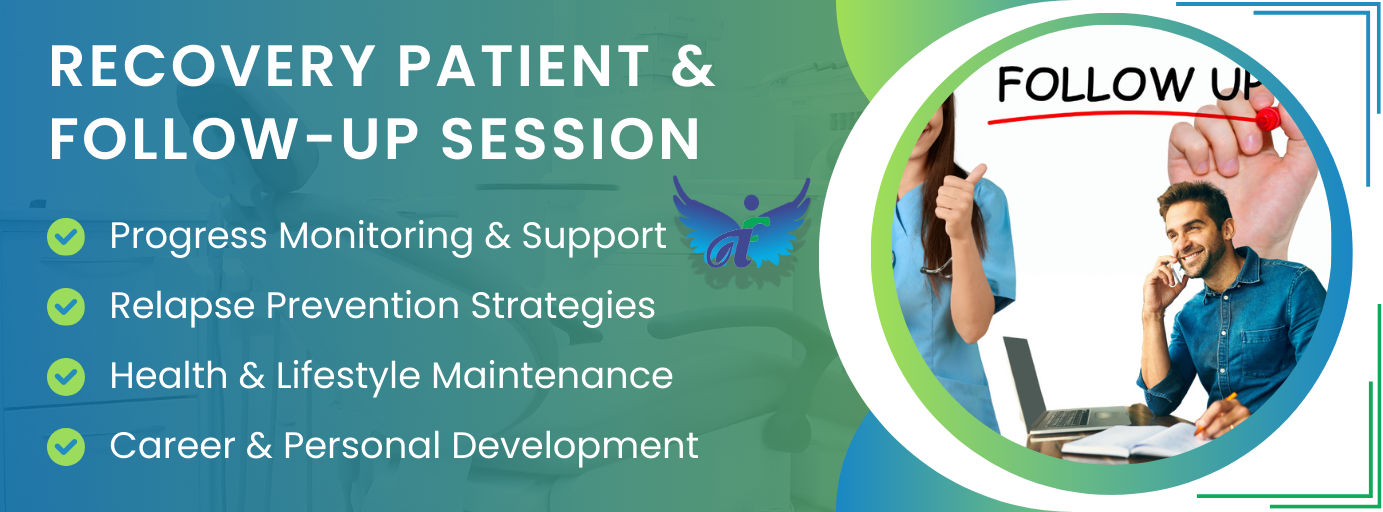
Follow-Up Sessions in Addiction Recovery
Follow-up sessions are a crucial part of long-term addiction recovery. They provide continuous support, relapse prevention, and mental well-being monitoring to help individuals stay committed to sobriety. Regular check-ins ensure that patients do not feel isolated and have access to professional guidance even after completing a rehabilitation program.
1. Purpose of Follow-Up Sessions
🎯 Track Progress – Monitor physical, mental, and emotional recovery.
🎯 Prevent Relapse – Identify early warning signs and provide support.
🎯 Provide Emotional & Social Support – Strengthen family and peer relationships.
🎯 Encourage Lifestyle Changes – Promote healthy habits for long-term sobriety.
2. Types of Follow-Up Sessions
🔹 One-on-One Counseling
- Personal therapy sessions with a counselor to discuss challenges and improvements.
- Helps patients cope with stress, cravings, and emotional struggles.
🔹 Group Therapy & Peer Support
- Attending group meetings like Alcoholics Anonymous (AA) or Narcotics Anonymous (NA).
- Encourages patients to share their progress and support others in recovery.
🔹 Medical Check-Ups
- Regular health assessments to monitor organ recovery and physical well-being.
- Adjustments in medications, if needed, for long-term health support.
🔹 Family Support Sessions
- Helps families understand how to support their loved ones post-rehabilitation.
- Teaches conflict resolution, healthy communication, and emotional support strategies.
Why Choose Amends Foundation ?
✅ Confidential & Supportive Environment
✅ Qualified & Experienced Team
✅ 24/7 Medical & Emergency Support
Service Locations in Tamil Nadu:
Madurai, Trichy, Pudukkottai, Nager coil, Kanniya kumari & Nearby districts
📞 Call Us: 88701 86186 today for a confidential consultation, Your recovery is possible — and it starts now.
Amends Foundation Booking 8870186186