
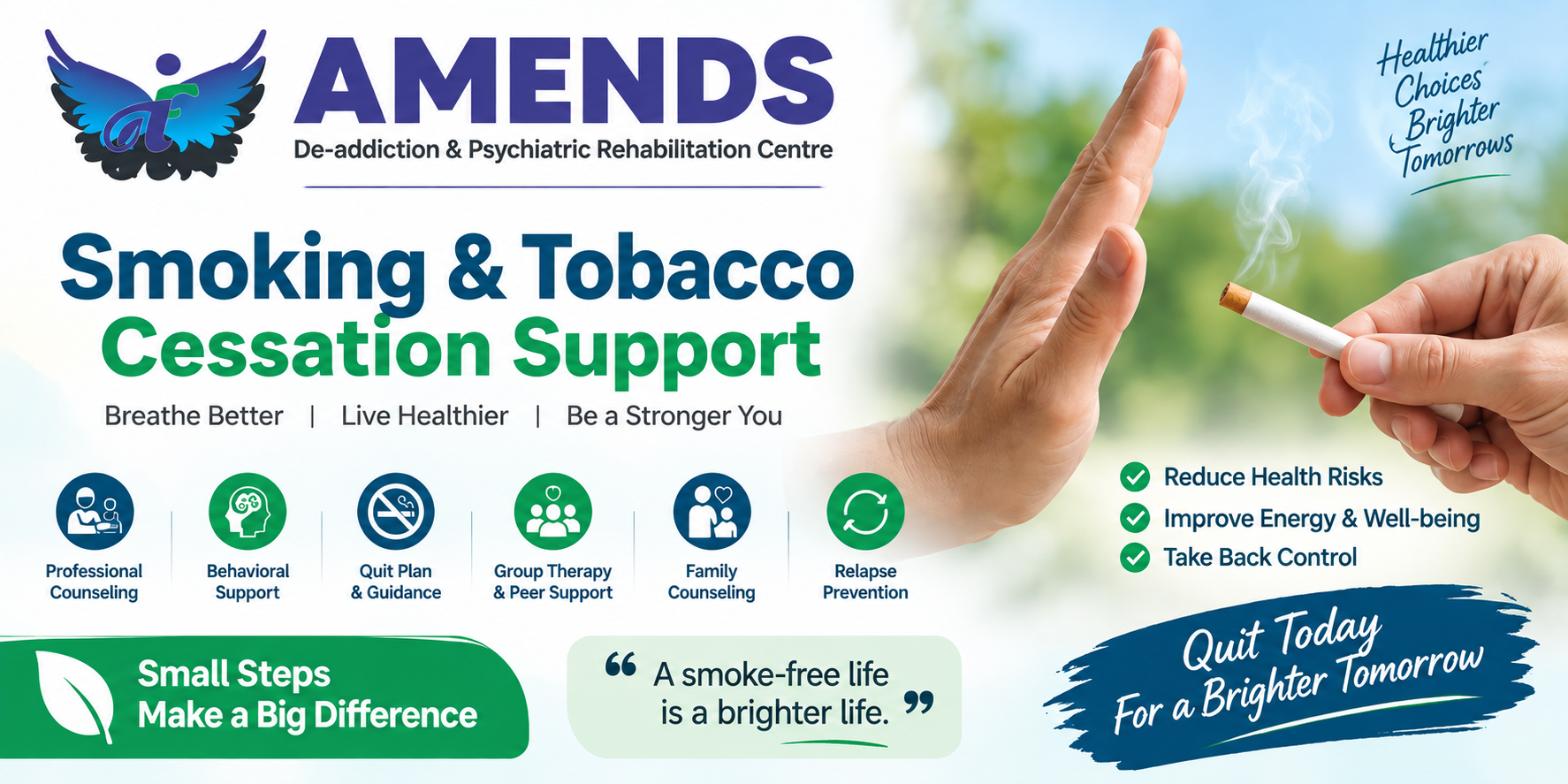
🚭 Smoking & Tobacco Treatment Information
What is Smoking & Tobacco Treatment?
Smoking and tobacco cessation treatment is a structured recovery-support process designed to help individuals quit smoking, tobacco and nicotine-related habits. It combines counseling, behavioral support, quit planning, coping strategies and continued follow-up.
Our Treatment Approach
1. Assessment & Understanding
Understanding the individual's smoking/tobacco use, habits, triggers and recovery needs.
2. Professional Counseling
One-to-one counseling to address personal challenges, motivation, triggers and barriers to quitting.
3. Behavioral Support
Developing healthier responses to cravings, stress and situations associated with tobacco use.
4. Quit Plan & Guidance
Creating a practical, individualized plan to work toward stopping smoking or tobacco use.
5. Group & Peer Support
Structured group sessions can provide encouragement, accountability and shared recovery experiences.
6. Family Counseling & Awareness
Helping family members understand the challenges of tobacco dependence and provide supportive encouragement.
7. Relapse Prevention
Learning to recognize triggers and develop coping strategies that support continued recovery. The treatment material identifies CBT and relapse-prevention training as important evidence-based approaches.
8. Aftercare & Follow-Up
Continued counseling and follow-up support after the primary treatment phase to help maintain progress and address emerging challenges.
Who Can Seek Support?
Support may be appropriate for people who:
- Want to quit smoking
- Want to stop tobacco use
- Are struggling with nicotine-related habits
- Have difficulty managing triggers or cravings
- Have tried quitting before and need additional support
- Want professional guidance to maintain their progress
Healing Journeys: What Our Patients Say
20
Experienced members
350
Patients recover per year
10
Years of Experience
100
Satisfied Patients
Our Customer Reviews
EXCELLENT
Experienced members
Patients recover per year
Years of Experience
Satisfied Patients
Begin Your Recovery Journey
You don’t have to face addiction alone.
Take the first step toward a healthier, more hopeful life with compassionate, individualized recovery support.
Alcohol • Drug • Smoking & Tobacco • Counseling • Rehabilitation • Aftercare
AMENDS Foundation — Support for your journey to recovery.
🚭 Smoking & Tobacco Cessation – FAQ
1. What is smoking and tobacco cessation?
Smoking and tobacco cessation is a structured process that helps individuals work toward quitting smoking, tobacco, and nicotine-related habits through counseling, behavioral support, quit planning, and ongoing recovery support.
2. Why is it difficult to quit smoking?
Nicotine dependence can make quitting challenging. A structured support program can help individuals understand their habits, identify triggers, develop coping strategies, and stay engaged with their quit plan.
3. What support is available at AMENDS Foundation?
AMENDS Foundation provides professional counseling, behavioral support, quit planning and guidance, group and peer support, family counseling, and relapse-prevention support as part of its recovery services.
4. Do I need professional help to quit smoking?
Not everyone needs the same level of support. Professional counseling can be helpful for individuals who are finding it difficult to quit independently or who need guidance with triggers, cravings and maintaining their recovery.
5. What happens during smoking cessation counseling?
Counseling can focus on:
Understanding smoking patterns
Identifying personal triggers
Developing coping skills
Creating a quit plan
Building motivation
Managing difficult situations
Preventing recurrence of tobacco use
The uploaded treatment material identifies Cognitive-Behavioral Therapy (CBT) and relapse-prevention training as important evidence-based approaches for addiction treatment.
6. Can family members be involved?
Yes. Family counseling and awareness can help family members understand substance-use problems and learn supportive ways to participate in the recovery process.
7. What if I start smoking again after quitting?
A return to smoking does not mean that support should stop. Aftercare and relapse-prevention support can help identify what triggered the recurrence, strengthen coping strategies, and continue the recovery plan. The treatment model emphasizes ongoing follow-up and aftercare rather than ending support when the primary treatment phase finishes.
8. Is vaping included in tobacco cessation support?
The uploaded AMENDS material specifically includes smoking, tobacco and nicotine-related habits, and its marketing plan also discusses vaping and nicotine dependence.
9. How long does smoking cessation treatment take?
The appropriate duration can vary according to the individual's needs and level of support required. The uploaded material does not specify a fixed duration for AMENDS smoking-cessation treatment.
10. Is smoking cessation only about stopping cigarettes?
No. Effective cessation support can also address behavioral habits, triggers, coping skills, motivation and ongoing recovery support, rather than focusing only on stopping cigarette use.
11. Is aftercare important after quitting?
Yes. Continued follow-up can help maintain engagement in recovery, address challenges and provide additional assistance when needed.
12. How can I get help for smoking or tobacco dependence?
You can contact AMENDS Foundation to learn more about its smoking and tobacco cessation counseling and recovery support services.